What is an Analog Clock: Meaning, Parts, and How It Works


Fig: An analog wall clock with vintage design. Such clocks use rotating hands on a numbered face to tell time. An analog clock displays time using a traditional clock face (usually marked 1–12) with moving hands. The short hand indicates the hour and the longer hand indicates minutes (and often a thin second hand sweeps continuously).
Unlike digital clocks that show numbers, reading an analog clock requires interpreting the position of these hands relative to the dial. Despite the rise of digital timepieces, analog clocks remain ubiquitous in homes, schools, and workplaces due to their visual appeal and familiarity. Many people even treat a stylish analog clock as home decor, blending function with a retro or artistic aesthetic.
How Analog Clocks Work
Analog clocks can be driven by mechanical gears or by modern electronic movements. In a mechanical clock, weights or a wound spring provide energy that is regulated by an escapement, allowing the gears to advance the hands at a steady rate. In electronic quartz clocks, a battery powers a quartz crystal oscillator; the electrical pulses from the crystal are fed into a small stepper motor or gear train which moves the hands precisely.
In both cases, appropriate gearing ensures one revolution per 12 hours for the hour hand and one revolution per 60 minutes for the minute hand. Modern analog clocks range from simple battery-operated models to complex radio-controlled “atomic” clocks.
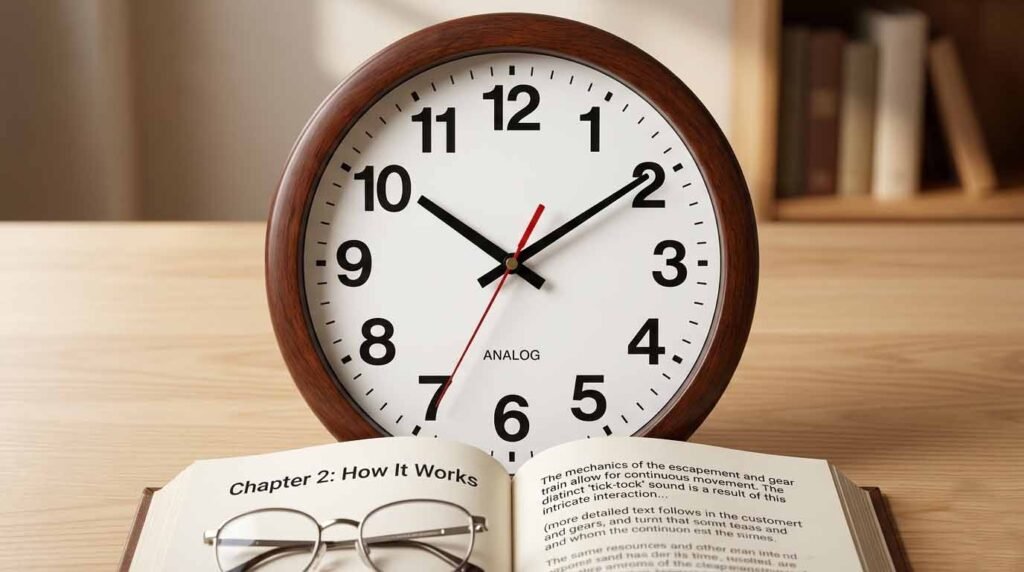
For example, some high-end analog wall clocks contain a radio receiver so they can auto-sync with the national time signal for perfect accuracy. In practice, most consumer analog clocks run on a single AA battery and use a quartz oscillator, making them accurate to within a few seconds per month with minimal maintenance.
The History of Analog Timekeeping
The concept of analog time display dates back millennia. Ancient civilizations used sundials (shadows cast by the Sun on a dial) and water clocks to mark the hours. The first geared mechanical clock is attributed to Archimedes in the 3rd century BC, but true clockwork appeared much later in medieval Europe.
In 1656 Christiaan Huygens invented the pendulum clock, greatly improving accuracy. Within a few decades, English clockmaker William Clement built the first longcase (“grandfather”) clock in 1670, and clockmakers like Daniel Quare added concentric minute hands and second hands to clocks. By the 18th and 19th centuries, clocks became mass-produced (e.g. US clockmaking boom using interchangeable parts) and took on the standardized 12‑hour dial we use today.
Since the 1960s, the rise of digital displays has led to “a notable decline in the use of analog clocks,” but analog timepieces never fully disappeared. Today’s analog clocks still echo these historical designs, whether in a classic pendulum mantle clock or a sleek mid-century modern wall clock.
Modern Trends: Analog vs. Digital
Even in the digital age, analog clocks maintain a strong niche. Many people still keep analog watches, wall clocks, or alarm clocks as a matter of habit or style. A 2025 survey found that 54% of American adults own a wall clock and 56% own an alarm clock (both typically analog).
However, there is a marked generational divide: 71% of Americans overall say they can instantly read an analog clock, but only 43% of adults under 30 can do so effortlessly, compared to 95% of those 65 and older. This reflects how younger generations often prefer digital time or smart devices.
Despite this, the analog clock market shows steady growth. Industry reports project the global analog clock market reaching roughly $2.1 billion by 2025 (up from $1.79 billion in 2021), with a compound annual growth around 4–5%. Analysts attribute this to the “enduring appeal of traditional timepieces” even in an era of smartphones. In short, analog clocks remain relevant: they coexist with digital clocks and serve markets that value their reliability, simplicity (no Internet needed), and aesthetic presence.
Analog Clocks in Home Decor
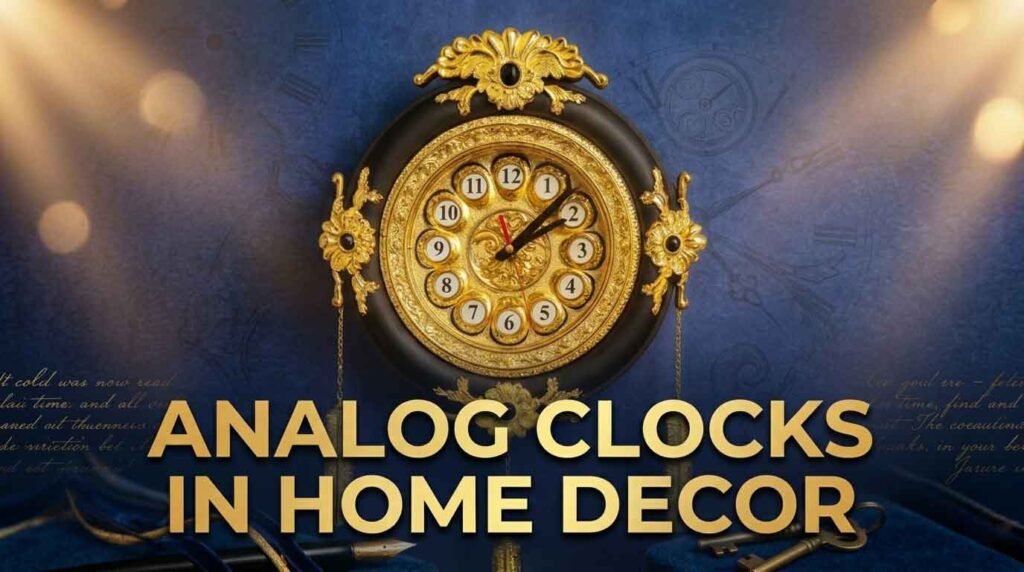
Fig: Stylish analog wall clocks used as decor in a modern interior. Analog clocks come in diverse designs – from minimalist to ornate – making them popular home decor accents. Analog clocks are often chosen as interior design elements. From a vintage wooden mantle clock to a colorful modern wall clock, their varied styles complement home decor themes. For example, designers still admire the 1949 “Nelson Sunburst” clock as a retro accent, and stores sell novelty clocks (e.g. melting Dali-style or geometric patterns) as art pieces.
Architectural Digest even highlights cutting-edge analog clock designs, noting that a high-tech “atomic” analog clock can be “a modern home decor item, as well as a nostalgic-feeling timepiece”. Market analysts similarly note that consumer demand is driven by interest in “vintage and classical elements in home and office decor”.
In practice, placing an analog wall clock in a living room or kitchen adds both function and style – one study found just over half of households keep a wall clock, underlining its role as a familiar decor piece. Whether framed in wood, metal or vibrant color, an analog clock often serves as a focal point on the wall, blending seamlessly into interior design.
Advantages and Drawbacks of Analog Clocks
- Visual appeal: Analog clocks double as art. Their shapes, colors and clock faces can be decorative. From sleek Scandinavian designs to rustic vintage faces, they offer endless aesthetic variety.
- Intuitive time sense: The moving hands give a sense of the passage of time (e.g. seeing the minute hand approach the next hour). Many people say analog faces help them quickly gauge “how much time is left” in a way digital numbers don’t.
- Battery/electricity independence: Simple analog clocks (quartz or mechanical) often run on a single battery or a wind-up spring. Unlike fully digital displays or smart clocks, they keep ticking even in a power outage.
- Educational value: Learning to read an analog clock can teach fractions and time concepts. (That said, as poll data show, some younger individuals find analog reading harder.)
- Accuracy: Quartz analog clocks are quite precise, but generally a synced digital/atomic clock can be more accurate. Many analog models lack automatic timezone updates or GPS sync, so they may need manual setting.
- Potential confusion: When analog faces use 12-hour dials, forgetfulness about AM/PM can occur (e.g. setting an alarm for “6 o’clock” at night vs morning). This is the same problem digital clocks face without AM/PM, but a digital clock avoids ambiguity by explicitly displaying “18:00,” etc.
Overall, analog clocks trade off some convenience of digital time (like instant precision or AM/PM indicators) for enduring style and a tangible connection to traditional timekeeping. They tend to occupy a niche where aesthetic and tactile feedback are valued over cutting-edge tech.
Conclusion
In summary, an analog clock is a timekeeping device that uses rotating hands on a numbered dial to indicate hours, minutes (and often seconds). Such clocks have evolved from ancient sundials and early mechanical clocks to modern battery-powered models, yet their basic face-and-hands design has changed little.
Analog clocks still matter today: they remain popular for home and office decor, niche timing applications, and as reliable backups when digital systems fail. Recent data show a robust market (projected over $2 billion globally by 2025) and significant household usage. Looking forward, analog clocks will likely endure as statement pieces and teaching tools even as technology advances.
Consumers and businesses should recognize that analog and digital clocks each serve different needs – analog clocks bring character and simplicity, while digital ones offer precision and convenience. As interest in vintage and classic decor grows, we can expect smart blends (e.g. retro designs with modern accuracy) to keep analog clocks relevant into the future.