How to Stop Clock Ticking Noise (Simple Fixes That Work)

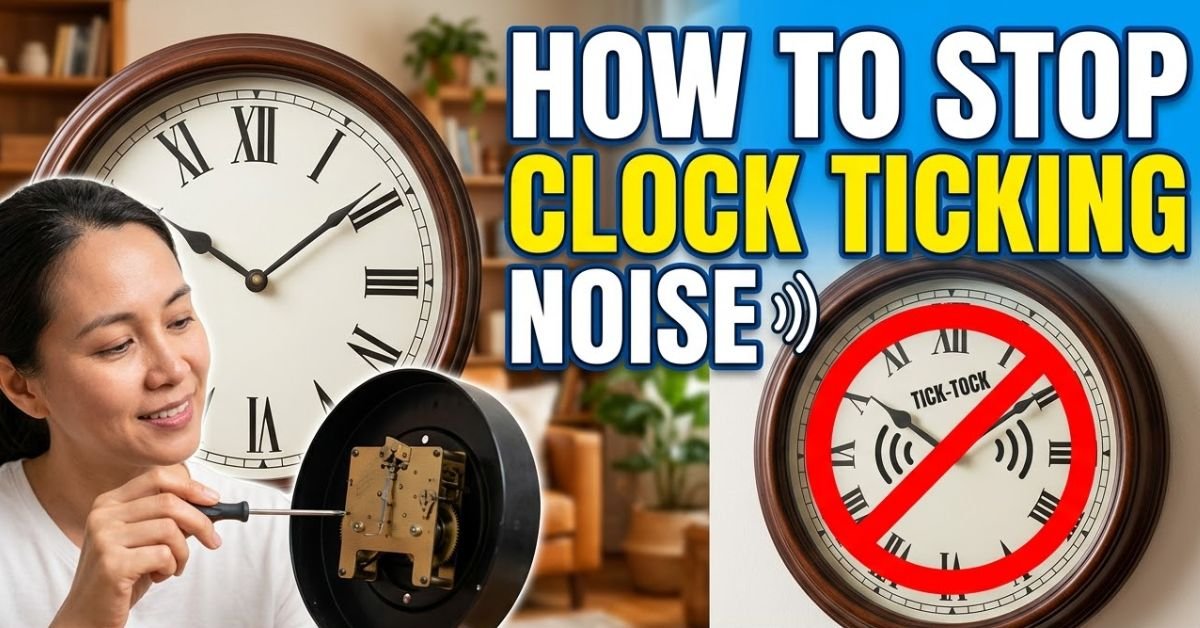
Analog clocks can be charming decor pieces in any room, but their incessant “tick-tock” can drive some people crazy. Many of us find a constant ticking sound particularly distracting when trying to read, work, or sleep. One design writer put it bluntly: “I love the look of vintage clocks… but their constant ticking? NO THANK YOU.”.
In short, while clock ticks are normal, reducing or eliminating them can greatly improve comfort and concentration in your home. In this article, we’ll explore why clocks tick (and why that matters), and cover proven ways to muffle or stop the noise—helping you keep the style of a wall clock without the sound that comes with it.
Why Does a Clock Tick (and Why It’s a Problem)
The familiar tick-tock comes from the clock’s movement mechanism. In a typical quartz analog clock, a small stepper motor advances the second hand in one-second increments. Each “step” of the mechanism (often an escapement) produces a click.
Cheaper clocks often use a simple pulsed mechanism that makes each tick more audible. Clocks with wooden or plastic cases can amplify these sounds (like a soundboard on a guitar), making the ticking louder in a quiet room.
This ticking can be more than an annoyance. Low-level repetitive sounds are known to disrupt sleep and concentration. Studies show even soft, consistent noise can disturb light sleepers, and experts say turning off or covering noisy clocks can improve sleep quality. For anyone sensitive to noise—such as during late-night study or office work—a ticking clock can reduce focus and increase stress.
In design terms, a loud clock may clash with a peaceful home decor atmosphere (for example, in a cozy bedroom or minimalist study, silence is often preferred). Understanding how the tick is generated helps us tackle it: it’s fundamentally a moving gear or escapement clicking into place. The good news is, there are several ways to dampen or eliminate that sound, as we explain below.
How to Muffle or Eliminate the Tick

Here are several effective methods to quiet a ticking clock. Try the ones that fit your clock type and comfort with DIY:
- Install a silent (sweep) movement: Replace the clock’s noisy mechanism with a quartz movement labeled “silent” or “continuous.” Many inexpensive kits (about $10) are sold online. You remove the old movement (power off first), keep the original hands, and install the new silent unit through the clock’s center hole. These sweep movements advance the second hand in a smooth glide rather than noticeable ticks.
- Lubricate the gears: Over time, friction in a clock’s gears and escapement can cause louder ticking. Applying clock oil sparingly to the movement can smooth operation and reduce noise. Only use specialized clock oil (not generic WD-40) and just a drop on the escapement lever or pivots. One expert advises a “small amount of clock oil” on the escapement to minimize friction. This should be done carefully—avoid over-oiling, which can attract dust or damage parts. After oiling, let the clock run so excess oil dissipates. Many find this quiets the tick slightly, especially on older mechanical clocks.
- Level and isolate the clock: Make sure the clock is perfectly level. An uneven clock or pendulum can bump more loudly, so placing it on a level surface or hanging it straight on the wall can help. Additionally, isolate the movement from hard surfaces. For wall clocks, stick small felt or rubber pads between the clock and wall. The felt pads act as vibration dampers, preventing the tick noise from resonating through the wall.On larger wooden cases (like mantel or grandfather clocks), decoupling the movement from the case helps a lot. For example, one clock enthusiast suggests using rubber washers or padding around the mechanism to prevent the wooden case from amplifying the click. In practice, you might put felt pads inside at the corners or attach rubber grommets where screws mount the movement.
- Add sound-dampening materials: If the ticking is still intrusive, try surrounding the clock with absorbing materials. For wall clocks, you could cover the back with acoustic foam or even a piece of dense cloth.
- Soundproof the room: Consider wider changes to reduce noise. Soft furnishings, rugs, and wall hangings naturally absorb sound. If the clock is in a bare room, adding curtains or bookshelves can lessen echoes, making the tick less noticeable. You could even place the clock on a padded or upholstered surface rather than hard wood. In extreme cases (e.g. for sensitive sleepers), using a white noise machine or fan can mask the tick entirely.
- Professionally service or stop the clock: A clockmaker can overhaul an antique or heirloom clock—cleaning and adjusting it for quieter operation (including fixing any loose parts). As a last resort, you could simply turn off the clock when quiet is needed (remove the battery or unplug it). This means sacrificing timekeeping, but it instantly removes the sound. Just be sure to reset it carefully when you turn it back on.
By applying one or more of these methods, most ticking can be significantly reduced. In many cases, replacing the movement (the sweep/mute kit) is the single most effective fix. A quick bullet-list recap:
- Replace with a silent sweep movement.
- Apply clock oil to the gears/escapement.
- Level the clock and cushion it with felt pads.
- Add insulating covers (glass/foam/fabric) around the mechanism.
- Decouple the movement from the case (rubber grommets/isolators).
- As a last resort, stop the clock when quiet is needed.
Each clock is different: what works for a plastic bedside alarm clock (easy to open and pad) might differ for a vintage wooden wall clock. But the strategies above cover the most common scenarios.
Choosing a Quiet Clock for Your Home
If your clock still ticks too loudly, you might consider replacing it with a clock designed for silence. Many modern clocks use a continuous-sweep mechanism (no tick) by default. When shopping, look for terms like “silent sweep” or “no ticking” on the product label. For example, some decorative weather display clocks are built to run “noiselessly” – models available on prowaller only “slightly rumble and burble” rather than tick. These can serve as beautiful home decor accents without the annoyance of noise. Don’t underestimate material and construction either: high-quality clocks with heavy, non-resonant cases (thick wood or metal faces) often sound quieter. Some manufacturers even market bedroom-friendly analog clocks explicitly as “silent”.
In general, a good replacement strategy is: if you still love an analog clock’s look, replace its movement or buy a new analog clock with a silent motor, rather than giving up on analog style entirely. For example, collections featured on prowaller.com highlight wall clocks that combine design with quiet operation.
These marry accuracy with aesthetic — a trend in 2025 home design is blending vintage analog style with modern technology. In short, silent or ultra-quiet clocks are readily available now, letting you keep an elegant timepiece on the wall without sacrificing tranquility.
Conclusion
Clock ticking is normal engineering, but it doesn’t have to be an everyday irritation. By understanding the cause of the noise, you can pick the right solution. For instance, a $10 silent quartz movement kit instantly silences a vintage clock, oiling and padding can quiet most others, and redecorating with soft materials will minimize echoes. If DIY adjustments aren’t enough, buying a clock engineered for silence is a practical upgrade.
In any case, silencing the tick can enhance your comfort, whether you’re working in a home office or sleeping in a quiet bedroom.
In the future outlook, clock makers seem aware of this preference: many new analog clocks focus on “quiet operation” or use sweep mechanisms by default. This fits with broader trends in home design and smart furnishings (e.g. smart wall clocks with apps). Ultimately, a ticking clock need not spoil your interior design — with the right fix, you can enjoy both the charm of analog timekeeping and the peace of a quiet home.