Blog
Pendulum Clock vs Quartz Clock: Which One Is Better for Your Home?

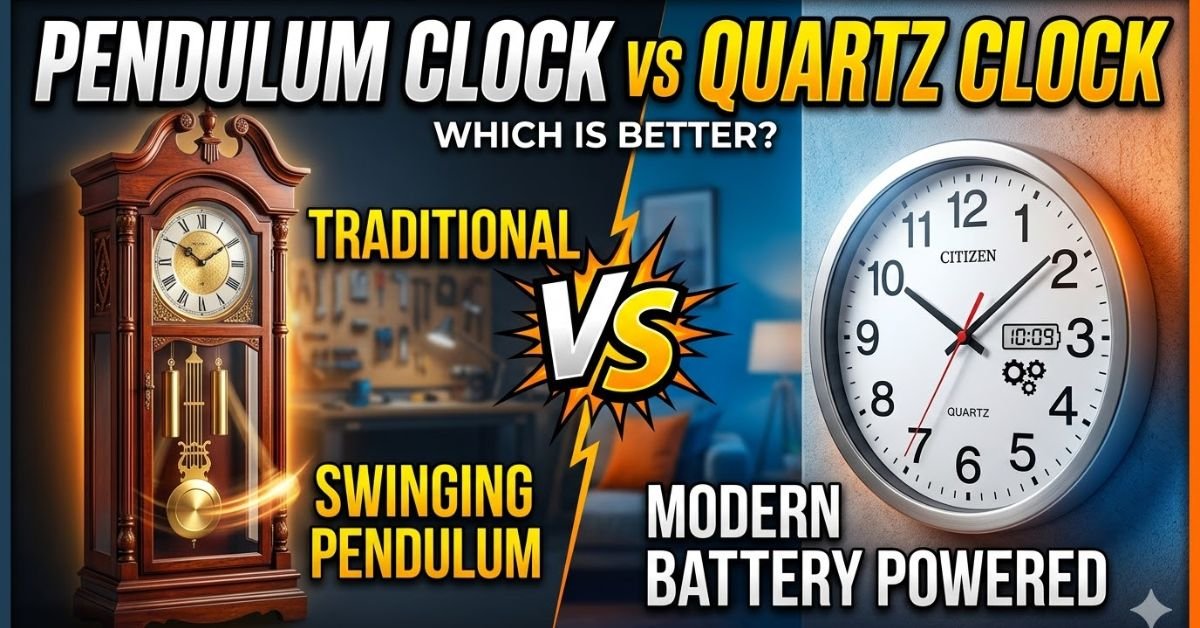
Clocks today serve not only to tell time but as decor statement pieces in the home. In fact, recent market studies show the global home clocks market is booming – projected to grow from about $2.16 billion in 2021 to nearly $3.88 billion by 2033 – driven largely by “increasing consumer interest in home decor” and the evolution of clocks into “essential decorative elements”. With this trend, choosing between a classic pendulum (mechanical) clock and a modern quartz clock is both a functional and aesthetic decision. In this post we break down the performance, maintenance, style, and cost of each, so you can decide which clock best fits your lifestyle and interior design.
Pendulum (Mechanical) Clocks: Heritage and Charm
A classic wooden pendulum wall clock adds vintage charm and becomes a focal point in a room. These clocks rely on weights or springs and a swinging pendulum to keep time. Pendulum clocks embody tradition: a wound spring or weight powers gears, while an escapement and swinging pendulum regulate each tick.
This mechanical complexity gives them heirloom quality and a distinctive “tick-tock” sound. A well-tuned pendulum clock can hold time fairly well – enthusiasts report errors of only a few minutes per month – but ordinary models usually drift more than quartz. They require careful mounting (the clock must be level for the pendulum to swing consistently) and regular servicing (oiling and cleaning every few years) to maintain accuracy.
In design terms, pendulum clocks are prized for their antique look and craftsmanship. Tall grandfather or wall models often feature wood cases, chimes, and ornate dials – making them dramatic centerpieces in traditional, farmhouse, or European-inspired interiors. Designers note an “analog revival” of gear-driven pendulum styles and reclaimed-wood frames, which evoke nostalgia and artisan quality.
Their slow oscillation and chimes add kinetic interest to a room. On the downside, this complexity means pendulum clocks can be pricey to buy and maintain. But for many buyers, the heritage and ambiance outweigh the extra upkeep: mechanical clocks often become family heirlooms, lasting decades if properly cared for.
Quartz Clocks: Modern Precision and Convenience
Contemporary quartz wall clocks use a battery-powered electronic mechanism (often just a step motor and quartz crystal) to keep very precise time. Their design can range from minimalist to whimsical to match any decor. Quartz clocks use electricity and a vibrating quartz crystal to regulate the hands.
A tiny quartz element oscillates 32,768 times per second, which the circuit counts to move the second hand once per second. The result is high precision: most quartz wall clocks hold time within about ±15 seconds per month (roughly ±0.5 seconds per day), far better than a typical mechanical clock. Modern quartz movements are also nearly silent (using sweep motors) and don’t require winding – you just replace the AA battery every 1–2 years.
In style, quartz clocks come in countless forms to fit contemporary decor. From sleek metal or plastic designs to digital displays, and even modern takes on pendulum clocks, there’s a quartz model for every theme. Manufacturers often highlight that quartz clocks are affordable and low-maintenance, appealing to households that want “dependable timekeeping without the upkeep”. For example, quartz clock makers emphasize that no winding or oiling is ever needed.
The downside is that quartz clocks generally have shorter lifespans: the electronic motor and circuit typically wear out in about 10–20 years. But because quartz clocks are inexpensive to replace, many users prefer the “set-and-forget” convenience and extreme reliability of quartz timing.
Key Differences at a Glance

- Accuracy: Quartz clocks win handily. Most stay within ±15 seconds per month (≲0.5 seconds/day). In contrast, a typical pendulum clock can gain or lose several seconds per day under normal conditions – or even a minute or more over a week if not finely regulated. (Premium mechanical clocks with temperature-compensated pendulums can do better, but are rare.)
- Maintenance: Quartz clocks require virtually none beyond a battery change every 1–2 years. Pendulum clocks need regular winding (daily/weekly) and professional servicing (cleaning and oiling) roughly every 3–5 years to keep running smoothly. Missing maintenance can cause drift or stoppage.
- Lifespan: A well-maintained pendulum clock can last for generations, easily 50–100 years. Many family heirloom clocks from the early 20th century still work today. Quartz movements, however, wear out: their motors, circuits, or solder joints eventually fail. Expect a quartz clock to be reliable for about 10–20 years, after which the movement is usually replaced (though the external clock case may still look great).
- Design & Decor: Pendulum clocks offer vintage charm and craftsmanship. Their natural wood cases, brass pendulums, and chimes make them eye-catching focal points – especially in classic, rustic, or European-style rooms. Quartz clocks offer versatility and modern style. You can find them in minimalist, mid-century, digital, or novelty themes to suit any contemporary decor. In fact, designers note a strong current demand for both minimalist (clean lines, neutral tones) and retro/vintage (antique-inspired) clock styles.
- Cost & Value (Pakistan Market): Quartz clocks are generally very affordable in Pakistan. Basic wall clocks usually range from Rs 700 to Rs 3,000, depending on size, design, and brand. Because their components are mass-produced, they are inexpensive and easy to replace.
- Mechanical pendulum clocks, on the other hand, start at a much higher price. A quality wall pendulum clock or grandfather-style clock can cost anywhere from Rs 15,000 to Rs 100,000+, especially if it has premium woodwork or imported mechanisms.
- Mechanical clocks are often considered decor pieces or long-term heirlooms, and antique grandfather clocks can sometimes sell for hundreds of thousands of rupees depending on age, brand, and condition. However, the resale market varies—some older clocks may only sell for Rs 10,000–30,000 if they are not rare.
- Quartz clocks usually have very little resale value because they are widely available and inexpensive, so most people simply replace them when they stop working.
Home Decor Trends and Practical Considerations
Choosing between pendulum and quartz often comes down to your home’s style and how you use the clock. If you want a clock as an artful centerpiece – say in a living room or entry – a pendulum clock can add warmth and character. Interiors with traditional or vintage themes often incorporate large antique-style clocks: designers mention that “oversize antique-style” timepieces or natural-material clocks (wood, stone, brass) are trending in décor. Pendulum clocks also subtly highlight the passage of time with their motion and chimes, which some families find appealing (e.g. in a dining room or parlor).
By contrast, quartz clocks shine in functional spaces or modern settings. For kitchens, bedrooms, or offices, people often prefer ultra-accurate, silent clocks that keep perfect time without fuss. The market intelligence also notes a surge in smart and multi-function clocks – many of which are quartz-based – as consumers look for integrated alarms, lighting controls, or even IoT features.
In terms of home décor, interior designers advise treating a clock like a piece of art: pick one that matches your aesthetic (wood and brass for warmth, sleek metal for contemporary). Sites like prowaller curate both traditional and modern clocks to suit various decor themes, which can help you find a clock that both looks great and suits your functional needs.
Conclusion
Both pendulum and quartz clocks have earned their place in modern homes. Quartz dominates on accuracy (often <±15 sec/month) and low cost, making it ideal for practical timekeeping. Pendulum clocks, with their nostalgic design and potential heirloom value, enrich a room’s character. Current trends (2024–2026) show rising popularity for both high-tech smart clocks and vintage-inspired analog pieces.
For your home, think about what matters most: do you want a reliable, maintenance-free clock, or a classic decorative centerpiece? Each has unique benefits – and you don’t have to give up one for the other. Consider combining styles (e.g. a quartz clock in the kitchen and a pendulum clock in the living room) to get the best of both worlds.